what is digital marketing
Blog

SEO vs Paid Ads: Which Is Better for Your Businss?

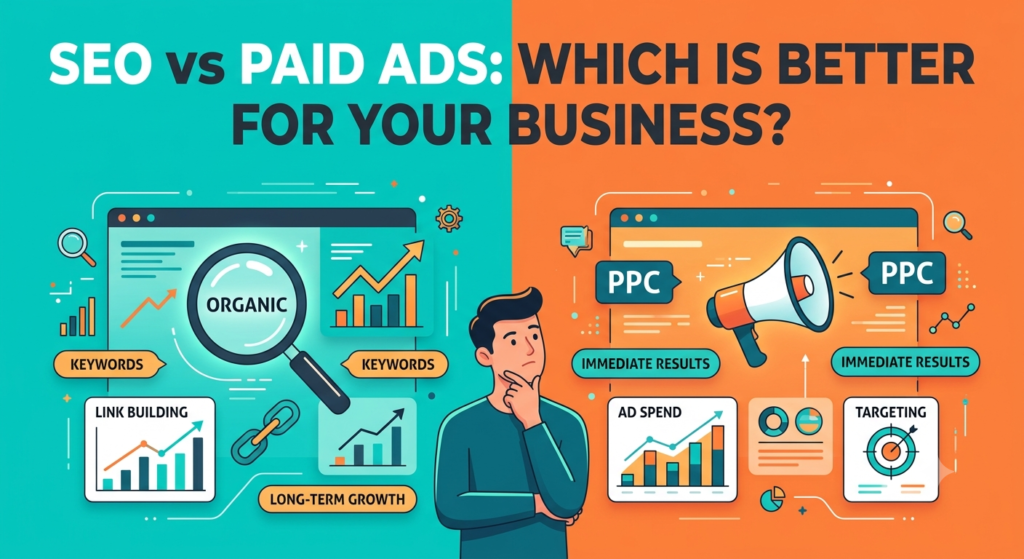
If you want your business to grow online, two strategies are almost impossible to ignore: Search Engine Optimization (SEO) and Paid Advertising. Both can help you attract customers, increase website traffic, generate leads, and grow revenue. But they work in very diffeent ways. So, which one is better for your business—SEO or Paid Ads? The answer depends on your goals, budget, industry, competition, and how quickly you want to see results. In this guide, we’ll compare SEO and Paid Ads and help you understand which strategy may be the right choice for your business. What Is SEO? SEO, or Search Engine Optimization, is the process of improving your website and content so that it appears higher in organic search engine results. For example, if you own a digital marketing agency and someone searches for “digital marketing agency in Delhi,” SEO can help your website appear in Google’s unpaid search results. SEO generally includes: The biggest advantage of SEO is that you don’t pay Google for every click on an organic result. However, SEO usually requires consistent effort and patience before you start seeing significant results. What Are Paid Ads? Paid advertising allows businesses to pay platforms to display their advertisements to potential customers. Popular platforms include Google Ads, Meta Ads, Instagram Ads, LinkedIn Ads, and YouTube Ads. For example, if you search for a service on Google, you may see sponsored results at the top of the page. A business pays for these advertisements when users interact with them, depending on the campaign and bidding model. Paid Ads can provide immediate visibility and are particularly useful when businesses want to generate traffic, leads, or sales quickly. SEO vs Paid Ads: Key Differences 1. Sped of Results This is one of the biggest differences. Paid Ads can generate traffic almost immediately once your campaign is approved and running. SEO takes longer because search engines need time to discover, evaluate, and rank your website and content. Winner for speed: Paid Ads 2. Long-Term Benefits SEO can create long-term value. A well-optimized blog or webpage can continue attracting organic visitors for months or even years if it maintains strong rankings and remains relevant. Paid Ads, on the other hand, generally stop generating traffic when you stop spending money. Winner for long-term organic growth: SEO 3. Cost SEO isn’t competely free. Even though you don’t pay for every organic click, you may invest in SEO professionals, content creation, technical improvements, tools, and link-building activities. Paid Ads require an advertising buget, and your costs depend on factors such as competition, audience, keywords, and campaign performance. Winner: It depends on your business and strategy. 4. Targeting Paid advertising provides highly detailed targeting options. You can target audiences based on factors such as location, interests, demographics, online behavior, keywords, and other available signals depending on the advertising platform. SEO primarily targets people based on what they search for and the relevance and authority of your website. Winner for precise audience targeting: Paid Ads 5. Trust and Credibility Users often trust organic search results because they aren’t advertisements. Appearing consistently in organic search results can also establish your business as an authority in your industry. However, well-desined paid campaigns can also build brand awareness and credibility. Winner: SEO SEO vs Paid Ads: Quick Comparison Factor SEO Paid Ads Speed Slow to Moderate Fast Long-Term Value High Depends on continued spending Immediate Traffic No Yes Targeting Search Intent Highly Flexible Ongoing Cost Moderate Required for continued campaigns Brand Authority Strong Moderate to Strong Best For Long-Term Growth Quick Results & Campaigns When Should You Choose SEO? SEO can be a great option if your business wants: For example, a locl service business can use local SEO to rank for searches related to its services and location. Similarly, an e-commerce business can create optimized product and category pages to attract customers searching for relevant products. When Should You Choose Paid Ads? Paid Ads may be better when you: For example, a business launching a limited-time offer may use Meta Ads or Google Ads to reach potential customers immediately rather than waiting for SEO rankings. Why Not Use Both? For many businesses, the bet answer isn’t SEO vs Paid Ads. It’s SEO + Pad Ads. These strategies can complement each other. Paid Ads can bring immediate traffic and leads while SEO builds long-term organic visibility. You can also use paid campaigns to test keywords, offers, audiences, and messaging. The insights you gain can help improve your broader marketing strategy. For example: SEO → Long-term organic growth Paid Ads → Immediate traffic and leads Together → A strnger and more balancd digital marketing strategy Final Verdict: SEO or Paid Ads? There is no universal winner. If your priority is quick results, targeted reach, and immediate lead generation, Paid Ads may be the better starting point. If your goal is long-term organic traffic, search visibility, and brand authority, SEO is an excellent investment. For most businesses, however, combining both strategies can provide the strongest results. At Unlock Digit, we help businesses build data-driven digital marketing strategies using SEO, Meta Ads, social media marketing, performance marketing, and lead generation. Don’t choose between visibility today and growth tomrrow. Build a strategy that delivers both. Ready to grow your business online? Unlock Your Growth with Unlock Digit.

Blog

What Is Digital Marketing? A Complete Beginner’s Guide.

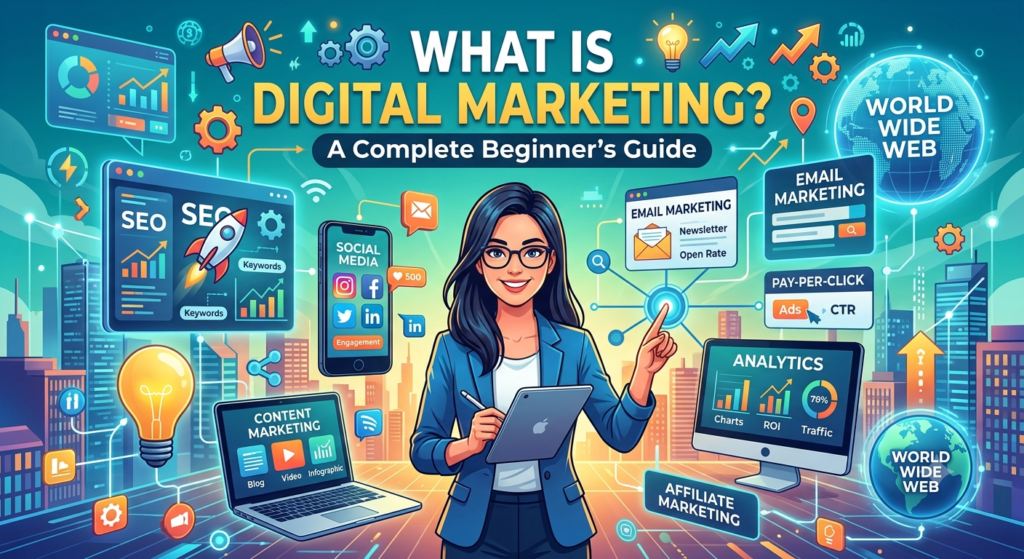
What Is Digital Marketing? A Complete Beginner’s Guide In today’s connected world, people spend a significant part of their day online—searhing on Google, scrolling through social media, watching videos, reading reviews, and shopping on websites. Because of this shift in consumer behavior, businesses can no longer depend only on traditional marketing methods. This is where digital marketing comes in. Digital marketing is one of the most effective ways for businesses to reach the right audience, build brand awareness, generate leads, and increase sales using digital channels. But what exactly is digital marketing? How does it work? What are its different types? And how can a beginner or small business get started? In this complete beginer’s guide, we’ll answer all these questions in simple language. What Is Digital Marketing? Digital marketing is the process of promoting a business, product, or service through digital channels such as search engines, social media platforms, websites, email, and online advertising. Instead of reaching customers through newspapers, television, radio, or billboards, digital marketing allows businesses to connect with potential customers through the devices and platforms they already use every day. For example, when you search for “best digital markting agency near me” on Google and see a company website, that is part of digital marketing. When you see a sponsored post from a business on Instagram or Facebook, that is digital marketing. When a company sends you an email offering a special discount, that is also digital marketing. In simple terms: Digital marketing = Reaching and converting customers through digital channels. Why Is Digital Marketing Important? The way people discover and choose businesses has changed dramatically. Before making a purchase, customrs often search online, compare different businesses, read reviews, check social media profiles, and visit websites. This makes having a strong digital presence extremely important for businesses of all sizes. Here are some major reasons why digital marketing matters: 1. Reach the Right Audience One of the biggest advantages of digital marketing is targeting. With platforms such as Meta Ads and Google Ads, businesses can target people based on factors such as location, interests, demographics, online behavior, and search intent. For example, a local restaurant in Delhi doesn’t necessarily need to advertise to people across India. It can focus its advertising on people within a specific area. This makes marketing more relevant and efficient. 2. Cost-Effective Marketing Traditional advertising can be expensive, especially for small businesses. Digital marketing provides flexible options. Businesses can start with a relatively small budget and increase their investment as they see positive results. You can also choose between organic strategies and paid advertising depending on your goals and budget. 3. Measurable Results Another major advantage is data. With digital marketing, businesses can track metrics such as: This helps businesses understand what is working and what needs improvement. 4. Build Long-Term Brand Awareness Digital marketing isn’t only about immediate sales. Consistent content, SEO, social meia activity, and valuable information can help a business establish credibility and become recognizable to its target audience. Over time, this can create trut and stronger customer relationships. Types of Digital Markting Digital marketing is a broad field that includes several different strategies. Let’s look at the most important ones. 1. Search Engine Optimization (SEO) SEO stands for Search Engine Optimization. It is the process of improving a website so that it can appear higher in search engine results for relevant searches. For example, imagine you own a digital marketing agency and someone searches: “Best digital marketing agecy in Delhi.” If your website appears among the top organic results, that person may visit your website and potentially become a customer. SEO generally involves areas such as: SEO can take time, but a strong SEO strategy can generate consistent organic traffic over the long term. 2. Social Media Marketing Social media platforms have become powerful marketing channels for businesses. Social Media Marketing involves promoting your brand, products, or services on platforms such as: Businesses can use social media to share educational content, videos, customer stories, offers, behind-the-scenes content, and industry insights. The goal isn’t always to sell immediately. Sometimes the goal is simply to stay visible and build relationships with your audience. 3. Paid Advertising Paid advertising allows businesses to reach potential customers by paying platforms to display advertisements. Popular advertising platforms include: For example, a business can run a Meta Ads campaign to promote a service and direct interested users to a landing page or WhatsApp converation. One of the biggest advantages of paid advertising is speed. While SEO can take months to build momentum, a well-optimized advertising campaign can start generating traffic and leads much faster. However, successful advertising requires proper targeting, creative testing, landing-page optimization, and continuous monitoring. 4. Content Marketing Content marketing focuses on creating useful and valuable content for your target audience. Examples include: For example, a digital marketing agency could publish a blog explaining how Meta Ads work for small businesses. Someone searching for that information may discover the agency through the blog. Good content doesn’t simply promote a business. It solves problems and answers questions. 5. Email Marketing Email marketing is one of the oldest forms of digital marketing, but it remains useful for many businesses. Companies can use email to: For example, an online store might send an email to customers about a new product launch or limited-time discount. The key is to provide relevant value rather than sending unnecessary promotional messages. 6. Lead Generation Lead generation focuses on attracting potential customers and collecting their contact information or initiating a conversation. A lead could come through: For service-based businesses, lead generation can be particularly important because the goal is often to start a conversation with someone who may eventually become a paying customer. How Does Digital Marketing Work? Digital marketing generally follows a simple customer journey. Step 1: Awareness First, people need to discover your brand. This can happen through: Step 2: Interest Once someone discovers your business, you need to give them a reason to learn more. This could

Meta Ads

How Meta Ads Can Generate High-Quality Leads for Your Business

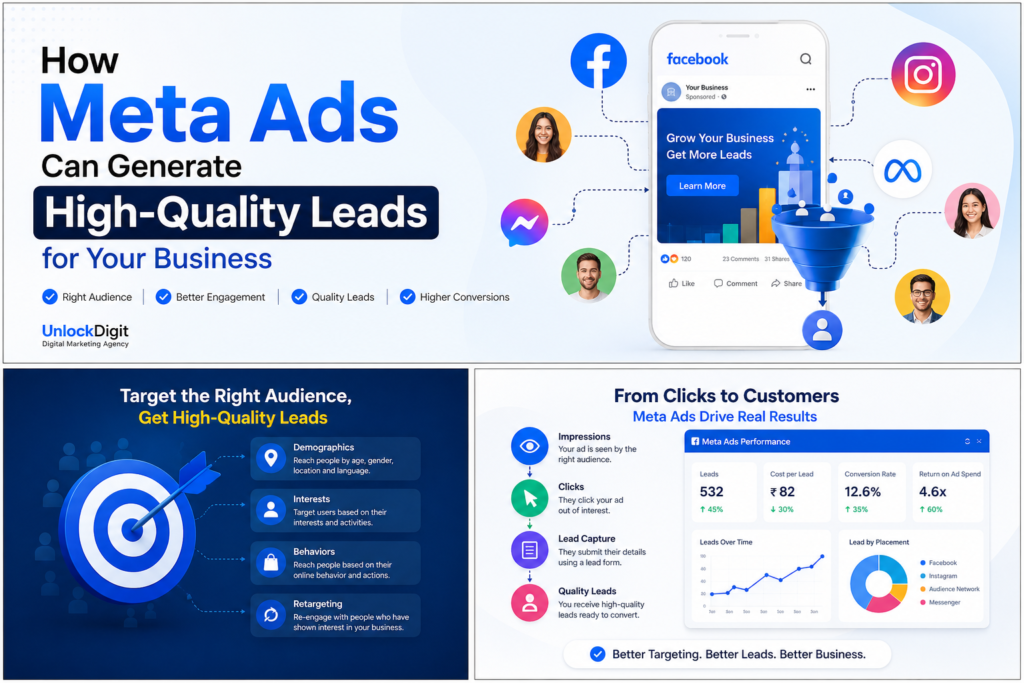
In today’s competitive digital landscape, simply having an online presence isn’t enough. Businesses need to connect with the right audience at the right time. That’s where Meta Ads come in. By advertising across Facebook and Instagram, businesses can reach potential customers based on their interests, behavior, location, demographics, and online activity. When executed strategically, Meta Ads can generate high-quality leads that are more likely to convert into paying customers. What Are Meta Ads? Meta Ads are paid advertisements displayed on Facebook, Instagram, Messenger, and the Meta Audience Network. They allow businesses to promote products or services to a highly targeted audience. Unlike traditional advertising, Meta Ads use advanced targeting options to ensure your message reaches people who are most interested in your business. Why Meta Ads Are Effective for Lead Generation One of the biggest advantages of Meta Ads is precise audience targeting. Whether you want to reach local customers, working professionals, business owners, or people with specific interests, Meta’s advertising platform makes it possible. Meta also offers built-in Lead Generation forms that let users submit their contact details without leaving the app. This creates a smooth user experience and often results in higher conversion rates compared to directing users to external websites. Additionally, businesses can use retargeting campaigns to reconnect with people who have visited their website, engaged with social media content, or interacted with previous ads. Since these users already know your brand, they’re more likely to become customers. How to Generate High-Quality Leads Generating leads isn’t just about getting more inquiries—it’s about attracting the right people. Here are a few proven strategies: Measuring Success To maximize your return on investment (ROI), monitor important metrics such as Cost Per Lead (CPL), Click-Through Rate (CTR), Conversion Rate, and Return on Ad Spend (ROAS). Regularly reviewing campaign performance helps identify what’s working and where improvements are needed. Installing the Meta Pixel on your website also provides valuable insights into visitor behavior, helping you optimize campaigns and improve future results. Why Work with UnlockDigit? Running successful Meta Ads requires more than simply boosting a post. It involves audience research, strategic planning, creative design, compelling copywriting, continuous optimization, and detailed performance analysis. At UnlockDigit, we help businesses create data-driven Meta advertising campaigns designed to generate high-quality leads and maximize marketing ROI. From campaign setup and audience targeting to creative development and performance optimization, our team focuses on delivering measurable business growth. Conclusion Meta Ads have become one of the most effective digital marketing tools for businesses looking to generate qualified leads. With advanced targeting capabilities, powerful retargeting features, and continuous optimization, businesses can connect with potential customers who are genuinely interested in their products or services. If you’re ready to grow your business through effective Meta advertising, UnlockDigit can help you create campaigns that drive real results and long-term success.

Scroll to Top