What Is Digital Marketing? A Complete Beginner’s Guide
In today’s connected world, people spend a significant part of their day online—searhing on Google, scrolling through social media, watching videos, reading reviews, and shopping on websites. Because of this shift in consumer behavior, businesses can no longer depend only on traditional marketing methods.
This is where digital marketing comes in.
Digital marketing is one of the most effective ways for businesses to reach the right audience, build brand awareness, generate leads, and increase sales using digital channels.
But what exactly is digital marketing? How does it work? What are its different types? And how can a beginner or small business get started?
In this complete beginer’s guide, we’ll answer all these questions in simple language.
What Is Digital Marketing?
Digital marketing is the process of promoting a business, product, or service through digital channels such as search engines, social media platforms, websites, email, and online advertising.
Instead of reaching customers through newspapers, television, radio, or billboards, digital marketing allows businesses to connect with potential customers through the devices and platforms they already use every day.
For example, when you search for “best digital markting agency near me” on Google and see a company website, that is part of digital marketing.
When you see a sponsored post from a business on Instagram or Facebook, that is digital marketing.
When a company sends you an email offering a special discount, that is also digital marketing.
In simple terms:
Digital marketing = Reaching and converting customers through digital channels.
Why Is Digital Marketing Important?
The way people discover and choose businesses has changed dramatically.
Before making a purchase, customrs often search online, compare different businesses, read reviews, check social media profiles, and visit websites.
This makes having a strong digital presence extremely important for businesses of all sizes.
Here are some major reasons why digital marketing matters:
1. Reach the Right Audience
One of the biggest advantages of digital marketing is targeting.
With platforms such as Meta Ads and Google Ads, businesses can target people based on factors such as location, interests, demographics, online behavior, and search intent.
For example, a local restaurant in Delhi doesn’t necessarily need to advertise to people across India. It can focus its advertising on people within a specific area.
This makes marketing more relevant and efficient.
2. Cost-Effective Marketing
Traditional advertising can be expensive, especially for small businesses.
Digital marketing provides flexible options. Businesses can start with a relatively small budget and increase their investment as they see positive results.
You can also choose between organic strategies and paid advertising depending on your goals and budget.
3. Measurable Results
Another major advantage is data.
With digital marketing, businesses can track metrics such as:
-
- Website visitors
-
- Ad impressions
-
- Clicks
-
- Leads
-
- Engaement
-
- Conversion rate
-
- Cost per lead
-
- Sales
This helps businesses understand what is working and what needs improvement.
4. Build Long-Term Brand Awareness
Digital marketing isn’t only about immediate sales.
Consistent content, SEO, social meia activity, and valuable information can help a business establish credibility and become recognizable to its target audience.
Over time, this can create trut and stronger customer relationships.
Types of Digital Markting
Digital marketing is a broad field that includes several different strategies. Let’s look at the most important ones.
1. Search Engine Optimization (SEO)
SEO stands for Search Engine Optimization.
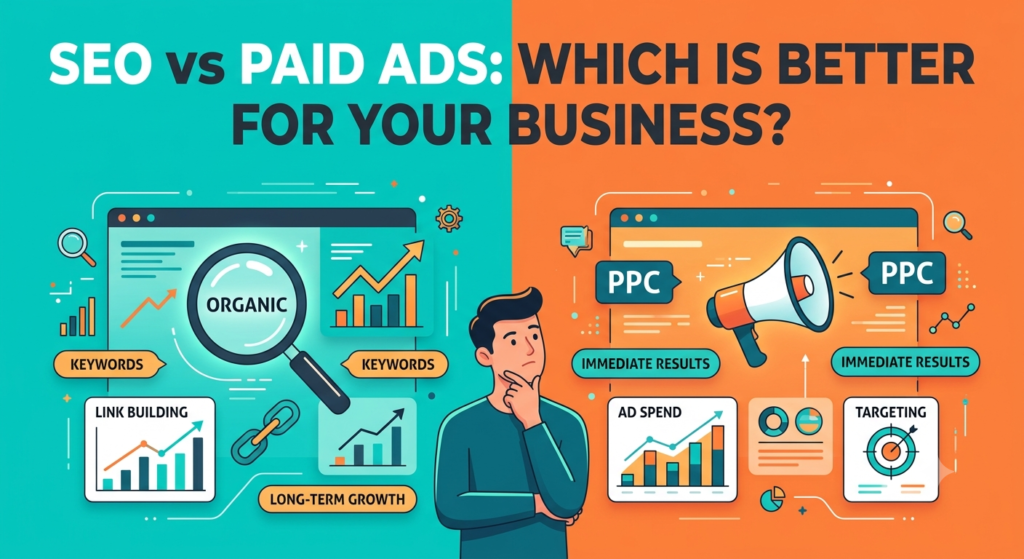
It is the process of improving a website so that it can appear higher in search engine results for relevant searches.
For example, imagine you own a digital marketing agency and someone searches:
“Best digital marketing agecy in Delhi.”
If your website appears among the top organic results, that person may visit your website and potentially become a customer.
SEO generally involves areas such as:
-
- Keyword research
-
- On-page SEO
-
- Technical SEO
-
- Content creation
-
- Link building
-
- Local SEO
-
- Website optimization
SEO can take time, but a strong SEO strategy can generate consistent organic traffic over the long term.
2. Social Media Marketing
Social media platforms have become powerful marketing channels for businesses.
Social Media Marketing involves promoting your brand, products, or services on platforms such as:
-
- X
-
- YouTube
Businesses can use social media to share educational content, videos, customer stories, offers, behind-the-scenes content, and industry insights.
The goal isn’t always to sell immediately.
Sometimes the goal is simply to stay visible and build relationships with your audience.
3. Paid Advertising
Paid advertising allows businesses to reach potential customers by paying platforms to display advertisements.
Popular advertising platforms include:
-
- Meta Ads
-
- Gogle Ads
-
- YouTube Ads
-
- LinkedIn Ads
For example, a business can run a Meta Ads campaign to promote a service and direct interested users to a landing page or WhatsApp converation.
One of the biggest advantages of paid advertising is speed. While SEO can take months to build momentum, a well-optimized advertising campaign can start generating traffic and leads much faster.
However, successful advertising requires proper targeting, creative testing, landing-page optimization, and continuous monitoring.
4. Content Marketing
Content marketing focuses on creating useful and valuable content for your target audience.
Examples include:
-
- Blog posts
-
- Videos
-
- Guides
-
- Infographics
-
- Case studies
-
- Social media posts
-
- E-books
For example, a digital marketing agency could publish a blog explaining how Meta Ads work for small businesses.
Someone searching for that information may discover the agency through the blog.
Good content doesn’t simply promote a business. It solves problems and answers questions.
5. Email Marketing
Email marketing is one of the oldest forms of digital marketing, but it remains useful for many businesses.
Companies can use email to:
-
- Share newsletters
-
- Promote offers
-
- Send product updates
-
- Nurture leads
-
- Re-engage customers
For example, an online store might send an email to customers about a new product launch or limited-time discount.
The key is to provide relevant value rather than sending unnecessary promotional messages.
6. Lead Generation
Lead generation focuses on attracting potential customers and collecting their contact information or initiating a conversation.
A lead could come through:
-
- Website forms
-
- Landing pages
-
- Meta Lead Ads
-
- Phone calls
-
- Website inquiries
For service-based businesses, lead generation can be particularly important because the goal is often to start a conversation with someone who may eventually become a paying customer.
How Does Digital Marketing Work?
Digital marketing generally follows a simple customer journey.
Step 1: Awareness
First, people need to discover your brand.
This can happen through:
-
- Google searches
-
- Social media
-
- Advertisements
-
- Videos
-
- Blog posts
Step 2: Interest
Once someone discovers your business, you need to give them a reason to learn more.
This could be through useful content, an attractive offer, a professional website, or informative videos.
Step 3: Consideration
The customer compares your business with alternatives.
They may check:
-
- Reviews
-
- Pricing
-
- Services
-
- Testimonials
-
- Social media
-
- Website quality
Step 4: Conversion
The customer finally takes an action.
This could be:
-
- Filling out a form
-
- Calling your business
-
- Sending a WhatsApp message
-
- Booking a consultation
-
- Purchasing a product
Step 5: Retention
Digital marketing doesn’t stop after a sale.
Businesses can use email marketing, social media, remarketing, and valuable content to stay connected with existing customers.
The ultimate goal is to turn customers into repeat customers and brand advocates.
Digital Marketing vs Traditional Marketing
Traditional marketing includes channels such as television, radio, newspapers, magazines, and billboards.
Digital marketing uses online channels.
One of the biggest differences is measurement and targeting.
With digital marketing, businesses can often see how many people viewed an advertisement, clicked on it, visited the website, submitted a form, or purchased something.
Digital marketing also allows businesses to make changes quickly.
For example, if one advertisement isn’t performing well, you can pause it and test another creative or audience.
How Can a Small Business Get Started With Digital Marketing?
You don’t need to use every digital marketing channel at once.
Start with a clear strategy.
1. Define Your Target Audience
Understand who your ideal customer is.
Ask questions such as:
-
- Who are they?
-
- Where do they live?
-
- What problems do they have?
-
- What do they need?
-
- Where do they spend time online?
2. Build a Professional Website
Your website is often the foundation of your online presence.
Make sure it is:
-
- Mobile-friendly
-
- Fast
-
- Easy to navigate
-
- Professionally designed
-
- Clear about your services
-
- Equipped with strong calls to action
3. Choose the Right Marketing Channels
Don’t try to be everywhere immediately.
For example:
Local business → Local SEO + Google + Social Media
B2B company → SEO + LinkedIn + Content Marketing
E-commerce business → SEO + Meta Ads + Google Ads + Social Media
Your strategy should depend on your audience and business goals.
4. Create Valuable Content
Answer the questions your customers are already asking.
Educational blogs, short-form videos, guides, and social media posts can help establish your expertise.
5. Measure Your Performance
Don’t rely only on likes and followers.
Track meaningful business metrics such as:
-
- Leads
-
- Sales
-
- Website traffic
-
- Conversion rate
-
- Cost per lead
-
- Return on ad spend
Data helps you make better marketing decisions.
Common Digital Marketing Mistakes Beginners Should Avoid
Many businesses make the mistake of expecting immediate results.
Here are a few common mistakes:
Trying every platform at once: Focus on the channels that matter most to your audience.
Ignoring SEO: Paid advertising can bring quick traffic, but SEO can help build long-term organic visibility.
Creating content without a strategy: Every piece of content should have a purpose.
Focusing only on followers: A smaller audience that actually converts can be more valuable than thousands of irrelevant followers.
Not tracking results: If you don’t measure your campaigns, you won’t know what is actually working.
Expecting overnight success: Digital marketing is a process of testing, learning, optimizing, and improving.
The Future of Digital Marketing
Digital marketing continues to evolve rapidly.
Artificial intelligence, automation, short-form video, personalization, voice search, data analytics, and changing search behavior are influencing how businesses reach customers.
However, one principle remains constant:
Understand your audience and provide genuine value.
Technology may change, but customers will always respond to businesses that understand their needs and communicate clearly.
Final Thoughts
Digital marketing is no longer optional for businesses that want to grow in an increasingly digital world.
From SEO and social media marketing to Meta Ads, content marketing, and lead generation, businesses have numerous opportunities to reach potential customers online.
The key is not to use every strategy at once.
Instead, understand your audience, define your goals, choose the right channels, create valuable content, measure your results, and continuously optimize your strategy.
Whether you’re a startup, small business, e-commerce brand, or established company, a well-planned digital marketing strategy can help you increase visibility, generate leads, build trust, and grow your business.
And if you’re looking for professional help to build and execute your digital marketing strategy, Unlock Digit can help you turn your online presence into a growth engine.
Unlock Your Growth with smarter, data-driven digital marketing.
Follow us on instagram – https://www.instagram.com/
Contact us – https://unlockdigit.com/contact-us/